
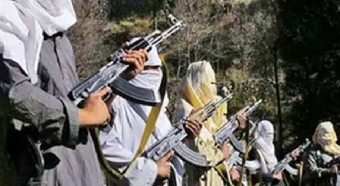

In a development that exposes Pakistan’s sinister plot, an IANS report quoting a security and foreign policy think tank stated that Pakistan’s ISI is orchestrating Gaza-style tunnel warfare in Kashmir. The report claimed that the Inter-Services Intelligence are actively fostering a tactical alliance between Hamas and Pakistan-based terror outfits Lashkar-e-Taiba and Jaish-e-Mohammed to carry out terror activities in India.
The report claimed that the arrival of Hamas in Pakistan is mutually beneficial, providing safe havens to Hamas and finances to its fledgling economy, as it faces major reverses in West Asia.
Indian security agencies have repeatedly flagged the emerging links between Hamas and Pakistan-based terror groups in recent months. With Lashkar-e-Taiba (LeT) and Jaish-e-Mohammed (JeM) already posing a major threat to India, the reported involvement of Hamas has raised fresh concerns.
The security report shed light on an alarming shift in Pakistan’s cross-border militant strategy. According to intelligence findings, the Pakistan Army and the ISI are orchestrating a deliberate plan to integrate Hamas into the South Asian terror ecosystem, aiming to upgrade groups like Lashkar-e-Taiba (LeT) and Jaish-e-Mohammed (JeM) to match Hamas’s tactical blueprint.
The report note that the ISI’s primary objective is to enable proxy groups to sustain a prolonged, low-intensity conflict against Indian security forces, mirroring how Hamas has maintained its prolonged conflict with Israel. Key elements of this strategic shift include:
Pakistani terror outfits are reportedly planning to leverage Hamas’s expertise in guerrilla tactics to construct extensive subterranean tunnel networks within Pakistan-occupied Kashmir (PoK). If these underground networks materialize, the Indian Army could face militants waging asymmetric tunnel-based guerrilla warfare similar to the challenges faced by Israeli forces in Gaza.
This model serves the Pakistan Army’s long-term interests by keeping militant proxies perpetually engaged against India while allowing the Pakistani military to maintain plausible deniability and exert influence from the background. Beyond physical combat tactics, security assessments highlight the growing convergence of propaganda and public outreach.
The paper notes that Islamabad seeks to replicate Hamas’s success in global perception management, drawing on how the group has influenced narratives abroad. Pakistan’s domestic propaganda machinery has heavily pushed false parallels between Gaza and Kashmir.