

The proposed Foreign Contribution (Regulation) Amendment Bill, 2026, is likely to be referred to a Joint Parliamentary Committee (JPC) for detailed scrutiny amid concerns raised by opposition parties and Christian groups, government sources said on Tuesday.
The Bill has not yet been listed on the Lok Sabha agenda for consideration and passage. The government had earlier indicated that it could be taken up on August 12.
The Foreign Contribution (Regulation) Amendment Bill, 2026, seeks to amend the Foreign Contribution (Regulation) Act, 2010, which regulates the acceptance and use of foreign contributions by individuals, associations and companies in India. It was introduced in the Lok Sabha on March 25, 2026.
One of the key proposals in the Bill is the creation of a ‘Designated Authority’ to oversee the foreign contributions and assets of organisations whose FCRA registration is cancelled, surrendered or otherwise ceases to be valid.
Under the proposed system, an organisation that loses its FCRA registration would initially have its foreign contributions and assets vested provisionally with the Designated Authority. If the organisation restores or renews its registration within the prescribed period, its assets and unused foreign funds would be returned. However, if the registration is not restored within the stipulated period, the assets could be permanently vested with the authority.
The Bill also proposes that an FCRA certificate would cease to remain valid upon expiry, non-renewal or refusal of renewal. The provision is aimed at dealing with the assets and foreign contributions of organisations that become defunct or whose registration comes to an end.
For assets such as places of worship, the proposed legislation says the Designated Authority would have to ensure that their religious character is preserved. It also provides for a right of revision and judicial appeal against orders passed by the authority.
The legislation further proposes changes to the penalty structure. The maximum imprisonment for violations of the FCRA would be reduced from five years to one year. It also proposes that state agencies obtain prior approval from the Central Government before launching investigations under the Act.
The proposed amendments have triggered concerns among Christian and minority organisations. A delegation of Christian and minority groups met Union Home Minister Amit Shah and sought changes to the Bill.
Mizoram Chief Minister Lalduhoma also met Shah to present concerns and recommendations from the state. He was accompanied by Reverend John Raldosanga, Chairman of the Mizoram Kohhran Hruaitu Committee (MKHC), and Reverend Lalhmangaiha, General Secretary of the Council of Churches in Mizoram (CCM).
According to sources, Christian representatives urged the government either to withdraw the Bill or refer it to a JPC for further examination.
Lalduhoma later said he had raised six issues with Shah and was assured that the proposed amendments would not have retrospective effect.
“The only thing that is very clearly mentioned to us is that it’s not going to be retrospective. That assurance was given to us, and the rest of the points will be given a paragraph-wise comment by him… the discussion on the 12th of this month in Parliament,” Lalduhoma had said.
Separately, a delegation led by DMK leader P Wilson met Amit Shah and submitted a memorandum raising concerns over what it described as the Bill’s impact on religious minorities and civil society.
The delegation specifically flagged provisions such as Section 14B and Chapter IIIA, arguing that bureaucratic delays on the FCRA Online Portal or minor technical non-compliances could lead to automatic cessation of an FCRA certificate. This, it said, could immediately trigger provisional and eventually permanent vesting of an organisation’s assets with a state-notified Designated Authority.
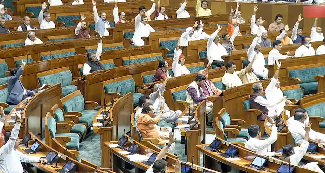
The developments come amid a disrupted Monsoon Session of Parliament, which began on July 20 and is scheduled to conclude on August 13. The session has witnessed repeated adjournments over opposition demands, including protests over Delhi Police action against demonstrators on July 20.
Several Bills have been passed in the Lok Sabha with little or no debate amid continued opposition protests.
(with ANI inputs)