
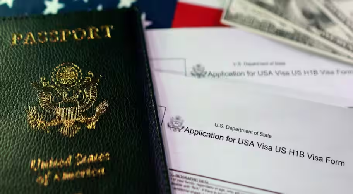

The United States is reviewing a proposal to eliminate a rule allowing certain foreign workers as much as 60 days to secure new employment after their previous job ends. This measure is currently being examined by the White House Office of Management and Budget (OMB), has not yet been finalized as an official rule, and its complete details have not been fully released to the public.
A change of this kind could force affected workers and their dependants to leave the country almost immediately. If finalised, the regulation would eliminate the existing 60-day grace period that currently applies to certain workers and their dependants when the employment underpinning their immigration status ends before their authorised period of stay expires.
The change could hold particular importance for the Indian expatriate community in the United States. Indian nationals have consistently been the largest group of beneficiaries under the H-1B skilled-worker programme. In fiscal year 2024, 71 per cent of all approved H-1B petitions were for individuals born in India, according to US Citizenship and Immigration Services (USCIS).
More than 5.2 million people of Indian origin currently reside in the US, based on recent estimates drawn from US Census data.
What is the 60-day rule?
The current US rule, introduced in 2017, was designed to give highly skilled foreign workers greater flexibility if they lose their jobs.
Under this provision, certain non-immigrant workers whose employment ends may remain in the United States for up to 60 consecutive days, or until their authorised period of stay expires, whichever occurs sooner.
The rule applies to workers in visa categories including E-1, E-2, E-3, H-1B, H-1B1, L-1, O-1 and TN, and also covers their dependants.
The 60-day period offers a vital window during which a worker can look for a new employer, apply for a different visa, or explore other lawful options for remaining in the United States. If the proposed regulation is adopted, workers would no longer be able to transfer to another employer or adjust their immigration status from within the US once their employment ends, unless USCIS decides to exercise its discretionary authority and intervenes.
In addition to H-1B visa holders, the proposed rule would also affect workers in other categories, including E-1, E-2, E-3, H-1B1, L-1, O-1 and TN.