
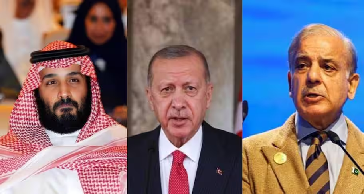

A member of Iran’s parliament who sits on the National Security and Foreign Policy Commission has criticised the newly signed defence pact between Pakistan, Saudi Arabia and Turkey, stating that the agreement will not ensure lasting security for Riyadh.
Ebrahim Rezaei reacted to the defence agreement on X and wrote, “Saudis must know that a paper agreement with Turkey and Pakistan will not bring them security, just as years of one-sided nursing to the Americans did not bring them security.”
He asserted that if Saudi Arabia revised its policies, it would no longer need to seek security from other countries.
Earlier that day, Pakistan, Saudi Arabia and Turkey signed a defence pact known as the “Mecca Joint Defence Agreement” aimed at reinforcing their security cooperation amid the ongoing conflict between the United States and Iran. The war has pulled in reluctant Gulf states and disrupted shipping through the Strait of Hormuz and the Red Sea.
The pact was signed in Mecca, Islam’s holiest city and the birthplace of Prophet Muhammad.
Inside the Pakistan-Saudi Arabia-Turkey defence agreement
Under the terms of the deal, an attack on any one of the three countries will be treated as an attack on all of them.
“The Agreement is intended to strengthen collective deterrence against any act of aggression, and stipulates that any armed attack against any one of the three States shall be regarded as an attack against them all. It further provides for the enhancement of all aspects of defence cooperation among the three States”, Pakistan’s Foreign Ministry said in a statement.
It is “guided by the longstanding historical ties among the three states, based on the enduring bonds of brotherhood and Islamic solidarity that unite them, and building upon their shared strategic interests and longstanding defence cooperation”, the statement added.
The agreement was formalised during a meeting in Saudi Arabia attended by Crown Prince Mohammed bin Salman, Turkish President Recep Tayyip Erdoğan and Pakistani Prime Minister Shehbaz Sharif.
Saudi Arabia, which has suffered several attacks linked to the conflict involving Iran, had been seeking to broaden its defence partnerships. Its vital infrastructure and oil installations have repeatedly come under drone and missile strikes carried out by Iran and its regional allies, including the Houthis and Iraqi militias.