
The future of the Strait of Hormuz has become a point of disagreement between the United States and Iran, with both sides offering different views on how shipping through the waterway should be managed.
A US official said any temporary shipping arrangements through the strategic waterway would not require permits and approvals or fees, arguing that no single country has the authority to control navigation through the Strait.
“Any temporary routes through the Strait of Hormuz will be without obstacles, permits, approvals or fees,” the official told Al Jazeera, adding that no party controls the shipping lanes or has the power to decide which vessels can pass through the waterway.
The statement came after Iranian officials rejected US President Donald Trump’s comments that efforts are underway to reopen the Strait of Hormuz and restore unrestricted movement of commercial vessels.
Tehran says routes must follow Iranian conditions
Mohsen Rezaee, a senior military adviser to Iran’s Supreme Leader Ayatollah Seyyed Mojtaba Khamenei, said Iran will not accept any shipping route through the Strait unless it is approved by Tehran.
According to Iran’s state broadcaster Press TV, Rezaee accused Washington of violating an earlier understanding related to the Strait before carrying out attacks against Iran.
He claimed Tehran responded militarily and warned that US warships using what Iran considers an unauthorised route could face a response.
The remarks came after Trump said talks were underway to “completely” reopen the waterway. He said the first stage of talks involved restoring normal shipping activity, while a later phase would address Iran’s nuclear programme.
Speaking to reporters at the White House, Trump described the diplomatic effort as Iran’s “last chance” to reach an agreement. He also said Washington paused a planned military strike after requests from Saudi Arabia, the United Arab Emirates, Qatar and Iran to continue diplomatic efforts.
However, Iran denied that direct negotiations with Washington are taking place.
Iranian Foreign Ministry spokesperson Esmail Baghaei said Tehran is not involved in direct or indirect talks with the United States.
Qatar hints at progress in talks
Amid the conflicting statements from Washington and Tehran, Qatar said efforts to find a solution are progressing.
Qatar’s Foreign Ministry spokesperson Majed al-Ansari said negotiations involving different parties are continuing, and draft agreements are being circulated.
“We can confirm that the efforts are still ongoing with all the parties. We are looking towards a diplomatic resolution as we are speaking right now,” he said.
He added that efforts to resolve the crisis are at “very progressive stages”, and Doha supports Oman’s role as a mediator.
According to Al Jazeera, Qatar said mediators are communicating with each other even though direct talks between the United States and Iran have not taken place.
US Treasury Secretary Scott Bessent also said progress is possible, saying there is a chance of reaching an agreement “today or tomorrow” that can reopen the Strait of Hormuz and move towards a more normal situation.
Iran sets conditions for Strait’s reopening
Iran has said that talks with Oman will not be enough to restore the Strait to normal operations.
A source close to Iran’s negotiating team told Fars News Agency that a broader agreement would require conditions, including an end to US military actions against Tehran.
“The Strait has been closed due to America’s breach of agreement, and without providing all the prerequisites, halting US attacks on Iran and fulfilling the conditions, the status of the Strait will not return to the way it was one month ago,” the source was quoted as saying.
The source said Iran’s talks with Oman covered a possible middle corridor arrangement aimed at addressing Tehran’s interests while also considering Oman’s concerns over maritime movement.
US weapons reserves run low
The diplomatic efforts are taking place along with reports about questions over US military resources.
Citing sources familiar with Pentagon assessments, CNN reported the United States has used a large portion of its Terminal High Altitude Area Defense (THAAD) and Patriot missile interceptors during the conflict with Iran.
The report said some US commanders have warned that stocks of certain air defence systems had been reduced after military operations. Gulf countries have also expressed worries about their ability to respond to possible missile and drone attacks if tensions rise further.
The White House rejected those concerns. Spokesperson Anna Kelly said the US military has “more than enough munitions, ammo and stockpiles to serve all of President Trump’s strategic goals and beyond”.
Pentagon spokesperson Sean Parnell also said the military retains the capability to carry out operations “at the time and place of the president’s choosing”.
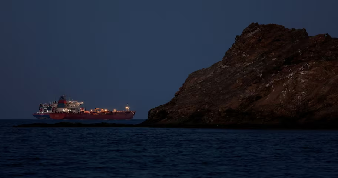
Located between Iran and Oman, The Strait of Hormuz is an important route for world’s energy shipments. Any disruption in the waterway can affect oil and gas markets across the world.