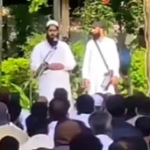


Pakistan has lost dozens of terrorists in the last four years after they were gunned down by unknown gunmen. Pakistani officials and terrorist groups have blamed India for carrying out the assassinations but failed to provide any proof. Now, in a stunning development that exposes Pakistan’s long-standing role as a global safe haven for terrorism, a senior Lashkar-e-Taiba (LeT) commander has openly admitted on camera that more than 30 high-ranking terrorists have been eliminated across Pakistani soil by unidentified assailants over the last few years.
Security agencies have verified the authenticity of the explosive video, confirming that the individual speaking is Rizwan Hanif, a chief coordinator for LeT’s Propaganda and Finance Wing (PFF) who prominently features on India’s wanted list.
The LeT terrorist admitted that over the past 3 to 4 years, more than 30 members of LeT have been gunned down in targeted attacks. The killings occurred across major Pakistani cities and regions, including Peshawar, Karachi, Rawalpindi, Rawalakot, and Muzaffarabad (PoJK). This is yet another occasion when the UN-designated terror outfit has publicly acknowledged the devastating attrition within its leadership and ranks.
This shocking confession lays bare the undeniable reality that Pakistan continues to function as a secure sanctuary and incubator for internationally proscribed terrorist organisations. For decades, Islamabad and Rawalpindi have systematically sheltered, funded, and protected mass murderers, orchestrating a state policy of cross-border terrorism while brazenly denying it to the international community.
During Operation Sindoor, Pakistani Army officials and ISI officials were openly seen attending the funeral of terrorists killed by India. India had attacked nine terror sites across Pakistan, killing over 100 terrorists.
The fact that top-tier commanders of terrorist outfits like Lashkar-e-Taiba can live, operate, and move freely across major Pakistani urban centres, such as Karachi, Peshawar, and Rawalpindi, proves that Pakistan remains directly complicit in harbouring global jihadist networks. Rather than dismantling these terror infrastructure networks, the Pakistani establishment has allowed its territory to become a revolving door for extremism.
During the video, Hanif was also recorded using inflammatory, highly objectionable, and anti-Hindu hate speech. Security experts note that this underscores the sinister indoctrination tactics employed by terror syndicates, weaponising religious bigotry to radicalise vulnerable youth and perpetuate regional instability.
While terror apologists continue to point fingers, this self-incriminating footage serves as a stark reminder of the chickens coming home to roost for a nation that has built its security paradigm on exporting terror.