
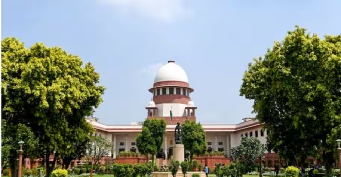

The Supreme Court clarified that states can go ahead and close or withdraw FIRs filed against students who took part in protests over the NEET paper leak but drew a firm line for a specific group: those with a history of serious crime won’t get the same relief.
A bench of Chief Justice Surya Kant along with Justices Joymalya Bagchi and V Mohana said the term “criminal antecedents,” used in its earlier July 28 order, applies only to people involved in grave and heinous offences.
Everyone else booked during the protests can have their cases closed by the Delhi government or other states, in accordance with law.
The clarification came after the Centre told the court there was confusion over how to carry out its own commitment.
Solicitor General Tushar Mehta said the government remained serious about not pursuing FIRs against protesting students, but made clear that this would not extend to those with criminal antecedents.
According to Mehta, FIRs against more than 2,700 people with such backgrounds will not be withdrawn.
That number over 2,700 is now the sharpest detail to emerge from Monday’s hearing.
It puts a concrete figure on how many people arrested during the protests will remain outside the scope of relief, even as thousands of other students are expected to see their cases dropped.
The July 28 order had already directed the release of protesters under 18 with no criminal antecedents and flagged concerns over police conduct during the demonstrations, noting that the right to peaceful protest is absolutely guaranteed.
Monday’s hearing was meant to settle confusion around that earlier order, after petitioners argued it could end up blocking the FIR withdrawals the Centre had already promised.
The protests, led by the Cockroach Janta Party, escalated after a march in Delhi on July 20 turned into clashes with the police, who used lathis and tear gas against demonstrators.
The case will continue to be heard as the court also weighs allegations of police excess during that crackdown.