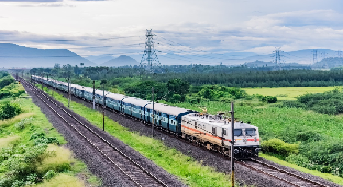

The Indian government is working on a Rs 450 billion (Rs 45,000 crore) railway infrastructure plan aimed at strengthening connectivity along its borders with China, Pakistan and Bangladesh. According to a Bloomberg report, the proposed investment will focus on expanding and modernising railway infrastructure in border states, improving both civilian connectivity and strategic mobility.
The plan is expected to benefit Punjab, Rajasthan, Himachal Pradesh, West Bengal, Assam and several northeastern states through the construction of new railway tracks, platforms and other key infrastructure.
Focus on border infrastructure
The report states that around 22% of the Indian Railways’ infrastructure spending over the next two years will be directed towards upgrading rail networks in border regions. The investment is intended to improve transportation capacity, strengthen logistics and support faster movement in strategically important areas.
The initiative comes at a time when India’s relations with China, Pakistan and Bangladesh remain strained. Ties with China have remained tense since the deadly border clash in 2020, while relations with Pakistan have also witnessed recent military tensions. Political developments in Bangladesh in 2024 have further added to regional uncertainties.
The Ministry of Railways has not officially commented on the reported investment plan.
Strategic and civilian benefits
The upgraded railway network is expected to improve connectivity in remote border areas while enhancing logistical support for the armed forces. The government is focusing on building high-capacity, all-weather rail infrastructure in the Himalayan region, the Siliguri Corridor and the northeastern states.
Over the past decade, nearly 1700 kilometres of railway lines have been added in these regions. India has also revived several Advanced Landing Grounds (ALGs), many of which had remained inactive since the 1962 war, to support helicopter and military aircraft operations.
Infrastructure push along sensitive borders
The Narendra Modi government has prioritised infrastructure development in strategically important regions. Railway connectivity has already reached the Kashmir Valley, while work is underway to extend rail services closer to the India-China border in Uttarakhand.
In addition, around 1450 kilometres of new roads are being built along the India-Pakistan border. Road infrastructure near Doklam, a disputed plateau claimed by both China and Bhutan, is also being upgraded.
China’s expanding border infrastructure
Since the 2017 Doklam military standoff, China has accelerated infrastructure development near the border, constructing dual-use facilities such as airports and heliports that can serve both civilian and military purposes. These developments have significantly strengthened China’s logistics capabilities in the region.In response, India has increased its own investment in border infrastructure to improve connectivity, strengthen defence preparedness and support faster deployment in strategically sensitive areas.