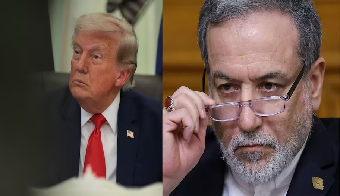

Tensions between the United States and Iran escalated on Saturday after President Donald Trump warned that military action remains possible if ongoing talks fail. Iran responded with a strong warning, saying any attack on its energy facilities would trigger retaliation across the region. The exchange has increased concerns about regional security and the impact on global energy supplies.
Trump signals possible military action against Iran
Speaking at a Cabinet meeting at Camp David, President Donald Trump said he is becoming less confident that diplomatic talks with Tehran will succeed.
He said negotiators, including Jared Kushner, Steve Witkoff and Secretary of State Marco Rubio, are still working to reach an agreement. However, Trump accused Iran of repeatedly failing to honour commitments.
“We will be hitting them if required,” Trump warned, indicating that military strikes remain an option if negotiations break down.
Iran warns against attacks on energy facilities
Iran quickly responded to Trump’s remarks. A media outlet linked to Iran’s top security body warned that any attack on the country’s energy sector would lead to retaliation against important energy infrastructure across the Middle East.
According to the warning, oil facilities in Saudi Arabia and the United Arab Emirates, along with gas facilities in Qatar and Israel, could become targets if Iran is attacked.
The outlet stated that regional energy sites “will all be burned to ashes” if strikes are carried out against Iran.
Iran reaches out to regional leaders
As tensions rose, Iranian Foreign Minister Abbas Araghchi held discussions with several regional leaders and officials.
His calls reportedly included Pakistan Army Chief Asim Munir, Turkish Foreign Minister Hakan Fidan and Saudi Foreign Minister Prince Faisal bin Farhan.
Araghchi said any military action by the United States or Israel, or support provided by regional countries, would receive a “proportionate and decisive response” from Tehran.
Security incidents reported across the region
The latest warnings come amid a series of security incidents across key Middle Eastern routes.
Kuwait’s military reported intercepting drones it described as hostile. Officials said debris from the interceptions damaged a government building and property on Bubiyan Island, although no injuries were reported.
Meanwhile, the UK Maritime Trade Operations agency reported two attacks on oil tankers off the coast of Oman. One vessel was reportedly struck in its engine room.
Iran-backed Houthi rebels in Yemen also renewed threats against commercial shipping near the Bab el-Mandeb Strait, one of the world’s busiest maritime routes.
Oil markets react to growing tensions
The worsening situation has drawn attention from global energy markets. Concerns about the safety of shipping routes and energy infrastructure have increased fears of supply disruptions.
Brent crude futures rose sharply during July as traders monitored developments in the Middle East. Market analysts remain focused on the Strait of Hormuz, a key route through which a significant share of the world’s oil supply passes.
Why the situation matters
The latest exchange of warnings highlights the fragile state of relations between Washington and Tehran. Any escalation could affect regional security, global trade routes and energy markets.
With diplomatic efforts still continuing, governments and investors around the world are closely watching developments to see whether tensions ease or move toward a wider confrontation.