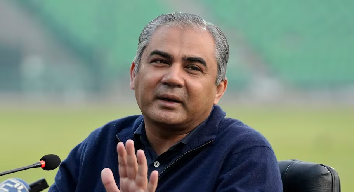

After Bangladesh, Nepal and India, it’s Pakistan which is fearing the rise of youth. In a brutally candid assessment of Pakistan’s governance crisis, Federal Interior Minister Mohsin Naqvi has issued a stark warning regarding the country’s mounting youth bulge. Naqvi cautioned that widespread economic despair and systemic paralysis could trigger an uncontrollable uprising.
Speaking at the 1st Economic Summit 2026 in Islamabad, Naqvi did not mince words about the state of the nation, declaring that Pakistan’s existing governance model has fundamentally failed. Pointing to severe economic distress, chronic inflation, and rampant unemployment, he highlighted the deep disconnect between the ruling elite and a frustrated younger generation.
A Warning Ignited by Regional Protests
Naqvi drew comparisons to recent youth-led student movements and political turmoil in neighbouring India. “We are not able to give the youth what they want,” Naqvi stated. “You can call them youth, you can call them cockroaches, or whatever you want. But if these ‘cockroaches’ get united, they can turn everything upside down.”
The interior minister emphasised that token gestures—such as distributing small stipends, laptops, or tablets—will no longer pacify Pakistan’s Gen-Z population. Instead, he noted that the country’s youth are demanding fundamental rights: merit-based employment, institutional transparency, justice, and equal economic opportunities.
Fragile Economy and Structural Paralysis
Naqvi’s remarks cut straight to the core of Pakistan’s compounding crises. Years of macroeconomic instability, crushing inflation, international debt dependency, and a lack of formal sector jobs have left millions of young Pakistanis economically stranded. Despite making up the vast majority of the population, youth face a bleak landscape where professional growth is stifled by nepotism, red tape, and systemic decay.
“The system in which we are living has collapsed,” Naqvi admitted, adding that the state continues to manage budgets with massive financing gaps while ignoring structural flaws that have persisted for decades. He argued that superficial fixes are no longer viable and called for a complete decentralisation of power, proposing the creation of new administrative units and provinces to bring governance closer to the common citizen.
An Urgent Crossroads
Political analysts note that the minister’s public warning underscores deep anxiety within government ranks regarding potential civil unrest. With economic reforms stalling and cost-of-living pressures pushing households to the brink, policymakers are increasingly fearful that pent-up frustration among the unemployed youth could manifest into large-scale, decentralised street protests capable of destabilizing the fragile political status quo.
The protests in Pakistan-occupied Kashmir have already witnessed high participation from the youth population. Pakistan is already facing a youth-led rebellion in Balochistan. Imran Khan’s party, Pakistan Tehreek-e-Insaf, has been popular among youth, and thus, the regime fears threats will no longer suppress the youth anger.
In India, students’ protest led by Cockroach Janata Party led to resignation of Union Education Minister Dharmendra Pradhan while forcing educational reforms for conducting competitive exams.