
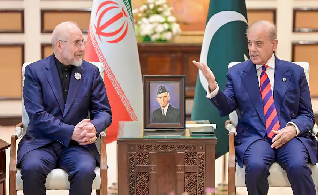

Pakistan has issued a strong warning to Iran, declaring that any attacks on Saudi Arabia amount to an attack on Pakistan itself and represent a “red line” that must not be crossed.
The development comes after Yemen’s Iran-backed Houthis launched attacks on Saudi Arabia this week, raising fears in Islamabad of being dragged into the escalating US-Iran conflict. Pakistan, which maintains close military ties with Saudi Arabia, including a mutual defence agreement and deployment of troops and fighter jets, finds itself in a delicate position.
“Our top civil and military leaders have conveyed to Iran at the highest level that the attacks on Saudi Arabia are attacks on Pakistan. It is our red line,” a Pakistani official told Reuters.
According to Reuters, the recent Houthi actions, including missile strikes following accusations against Saudi Arabia, have frustrated Pakistani leadership and complicated Islamabad’s role as a potential mediator between the United States and Iran. Pakistan had helped broker an interim deal last month in the ongoing tensions.
Saudi defence pact vs mediation role
With a mutual defence pact with Saudi Arabia and a mediator role in US-Iran, Pakistan is in the middle of balancing competing regional alliances. Islamabad signed a mutual defence pact with Riyadh last year, under which an attack on Saudi Arabia could trigger Pakistani military involvement. Thousands of Pakistani soldiers are deployed in the Kingdom, many near the Yemen border, increasing the risk of direct exposure.
At the same time, Pakistan shares a long border with Iran and has positioned itself as a mediator in the US-Iran conflict. Although the mediation effort is driven as much by economic interests, securing oil and gas supplies and trade routes through the Strait of Hormuz, as by diplomatic ambitions. Any major escalation involving Saudi Arabia could force Pakistan to choose sides.
Pakistani officials have also expressed concern over growing divisions within Iran’s leadership, particularly the influence of the Islamic Revolutionary Guard Corps. A planned Iranian delegation visit to Islamabad was reportedly postponed amid the tensions.
Pakistan’s Foreign Ministry has called for “maximum restraint” and emphasised dialogue and diplomacy as the only way forward.
As Islamabad walks a tightrope between its longstanding defence ties with Saudi Arabia and its delicate relationship with Iran, broader West Asian hostilities continue to test Pakistan’s strategic balancing act. This comes after the collapse of the 14-point MoU brokered with Islamabad’s mediation, which had included a 60-day ceasefire window aimed at finalising a lasting deal between Tehran and Washington.