
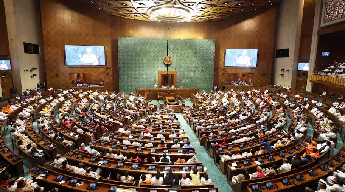

Soon, you may land in jail for not singing Vande Mataram. According to a Times of India report, a new legislative move is set to bring Vande Mataram under the legal umbrella of protected national symbols. Starting July 20, the government plans to introduce the “Prevention of Insults to National Honour (Amendment) Bill” in the Lok Sabha. This development follows a recent mandate from the Ministry of Home Affairs requiring the national song to be performed at official functions alongside the national anthem, Jana Gana Mana.
The bill, which received the green light from the Union Cabinet, aims to elevate the status of Vande Mataram to match other vital symbols of the republic, such as the national flag, the national anthem, and the Constitution. If passed by both houses of Parliament, any act of obstruction or disrespect toward the song will become a punishable criminal offence.
Historical and Political Context
For years, the Bharatiya Janata Party (BJP) has contended that previous “secular” administrations sidelined the song—which played a pivotal role in India’s struggle for independence. Recent political friction has only intensified this debate, as several reported instances of the song being met with alleged disrespect by opposition-led state governments or minority groups have stirred controversy.
Legal experts and observers are now waiting to see exactly how the proposed law defines an ‘insult’. Given that various disputes regarding the perceived slighting of the song have previously reached the courts, the wording of the legislation will be critical in shaping how it is applied and interpreted in the future.
Government Amends National Song, National Anthem Rule
Recently, the Ministry of Home Affairs (MHA) has directed all Central government offices and Governors’ offices to ensure strict adherence to the prescribed script, text, diction and pronunciation while singing or playing the National Song and the National Anthem.
In a fresh order issued to all central government departments and Governors’ offices, the Ministry restated the existing rules governing the occasions on which the National Song and the National Anthem are to be sung or played, while stressing that they must always be rendered with accuracy and due respect.
The order, dated July 9, stated that the National Song shall be sung during civil investiture ceremonies, on the arrival of the President at formal State functions and other government-organised events, as well as on his departure from such functions.