
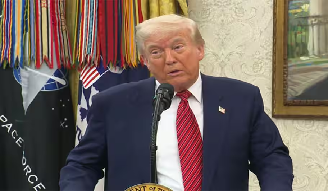

US President Donald Trump has called on Congress to begin work immediately on legislation to end birthright citizenship after the Supreme Court rejected his executive order on the issue.
In a post on his Truth Social on (June 30), he said lawmakers could act through law instead of pursuing a constitutional amendment. He described birthright citizenship as “expensive and unfair” and pledged full support for any effort to change the present system.
“The Supreme Court upheld Birthright Citizenship, which is too bad for our Country, but we can easily make it up in Congress through Legislation, with the support of the President, that has now been determined during this process. No long and unwieldy Constitutional Amendment is necessary! Congress should start TODAY to work on ending expensive and unfair to our Country, Birthright Citizenship. They will have my Complete and Total Support!” Trump wrote.
The comments came after the Supreme Court, on the final day of its term, voted 6-3 against a Trump-signed executive order that aimed to deny automatic citizenship to children born in the United States if their parents were in the country illegally or were on temporary immigration status.
SC backs constitutional protection
The ruling kept in place the long-standing interpretation of the Fourteenth Amendment, which grants citizenship to almost everyone born on American soil.
Lower courts had earlier blocked Trump’s order, and the apex court agreed with those decisions. Chief Justice John Roberts wrote the majority opinion.
“Children born in the United States to parents unlawfully or temporarily present are ‘subject to the jurisdiction’ of the United States and are citizens at birth under the Fourteenth Amendment’s Citizenship Clause,” he wrote in his verdict.
He also stressed the broader meaning of citizenship under the Constitution.
“Citizenship, then and now, was the right to have rights, to freely participate in our political community. The Framers of the Fourteenth Amendment extended that promise to ‘every free-born person in this land’. We keep that promise today,” he said.
The court’s decision made clear that changing birthright citizenship would require changes to the Constitution rather than action through an executive order. The chief justice referred to the text of the Fourteenth Amendment, which says that almost everyone born in the United States is a citizen, with only a narrow set of exceptions.
Birthright citizenship battle in Trump’s immigration push
The executive order at the centre of the case was one of Trump’s first actions after beginning his second term in office. It formed part of his wider immigration policy agenda and became the first major immigration measure from his administration to receive a final ruling from the Supreme Court.
The administration argued that automatic citizenship encouraged illegal immigration and birth tourism. The Justice Department repeated that position after the ruling.
In a statement, the department said it would continue efforts against “illegal birth tourism schemes”.
“Actors seeking to exploit loopholes to obtain automatic citizenship for their children pose a national security threat and will be brought to justice,” the department said in a post on X.
However, Trump has now turned to Congress. He insists lawmakers can still address the issue through legislation and has urged them to begin work without delay.
Whether Congress takes up the proposal or whether any future effort can overcome the constitutional protections cited by the Supreme Court is likely to define the next phase of the debate over birthright citizenship in the United States.