
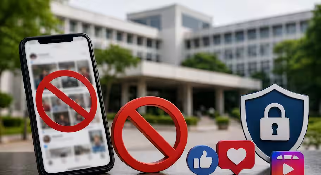

The All India Institute of Medical Sciences (AIIMS), New Delhi, has introduced a comprehensive social media policy for its students, resident doctors, faculty members and staff, laying down strict rules on online conduct, patient privacy and the use of the institute’s name and logo.
The guidelines come amid the growing use of social media platforms by medical professionals and students for content creation, public outreach and personal branding.
AIIMS said the move is aimed at protecting patient confidentiality, maintaining professional standards and safeguarding the reputation of the premier medical institution.
Under the new policy, students, employees and affiliated groups have been prohibited from using the AIIMS name, logo, emblem or any official branding on personal social media accounts, websites, videos, podcasts or promotional material without prior approval from the competent authority.
The institute has clarified that individuals cannot present personal views or opinions as official positions of AIIMS.
A major focus of the guidelines is patient privacy.
AIIMS has strictly barred the sharing of patient photographs, videos, medical records, diagnostic reports, treatment details or any information that could reveal a patient’s identity.
The restriction applies even when such content is shared for educational or awareness purposes unless explicit institutional approval has been obtained.
The institute has also addressed the growing trend of creating social media reels and short videos within hospital premises.
According to the guidelines, hospital wards, operation theatres, laboratories, classrooms and other institutional spaces cannot be used for content creation if it affects patient privacy, disrupts academic activities or compromises professional conduct.
In addition, AIIMS has prohibited the circulation of confidential academic material, including examination papers, internal communications, assessment documents and institutional records on social media platforms.
The institute stated that such restrictions are necessary to maintain the integrity of academic and administrative processes.
The policy applies to undergraduate, postgraduate and doctoral students, resident doctors, faculty members, researchers, employees and recognised student bodies.
Departments and institutional units operating official social media accounts have also been directed to follow approved communication protocols and branding guidelines.
AIIMS has warned that violations of the policy may attract disciplinary action depending on the seriousness of the offence.
The institute emphasized that responsible use of social media is essential for maintaining ethical standards, protecting patient rights and preserving public trust in healthcare institutions.
The move reflects a broader trend among educational and medical institutions seeking to regulate digital conduct as social media becomes an increasingly influential part of academic and professional life.