
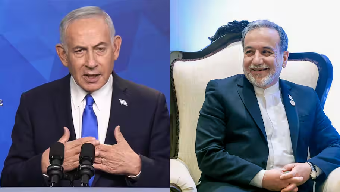

Israeli Prime Minister Benjamin Netanyahu firmly declared that Israeli troops will remain in a security zone in southern Lebanon for as long as needed to safeguard Israeli citizens, even as Iran signals that successful de-escalation in Lebanon will serve as the critical first test of a fragile US-brokered understanding.
Speaking at the Jerusalem News Syndicate’s International Policy Summit 2026, Netanyahu underscored Israel’s resolve on two key fronts, neutralising Iran’s nuclear ambitions and maintaining a military foothold in southern Lebanon.
“As long as we need to protect our people, we will remain in the security zone in South Lebanon,” he stated. “No country would be asked to do otherwise,” said Netanyahu.
Netanyahu said that the recent joint Israeli-US operations had dismantled Iran’s nuclear infrastructure and shattered its “terror axis,” including proxies like Hezbollah.
He claimed these actions prevented Iran from acquiring nuclear weapons that “they would have used,” describing the threat as existential. Israel, he pledged, would never allow Iran a nuclear weapon “as long as I am Prime Minister.”
On the Lebanon front, the Israeli Prime Minister drew a clear distinction: Israel’s fight is with Hezbollah, not the Lebanese state. He expressed hope for eventual peace and a formal agreement once the Iran-backed group is dismantled or disarmed.
High-stakes Lake Lucerne Summit in Switzerland
The comments come amid delicate US-Iran technical talks in Switzerland, focused on cementing a ceasefire in Lebanon, keeping the Strait of Hormuz open, and advancing elements of a potential nuclear agreement under a 14-point memorandum of understanding.
Netanyahu insisted Israel’s position remains unchanged regardless of negotiation outcomes.
In contrast, Iran’s Foreign Minister Seyed Abbas Araghchi on Monday portrayed recent mediation efforts by Pakistan and Qatar as delivering “major progress,” including sanctions waivers on oil and petrochemical exports, the lifting of blockades, the release of some frozen assets, and a major reconstruction plan for Iran.
In his X post, he identified the “Lebanon deconfliction cell” as the “1st real test” of the emerging deal
Araghchi’s statement highlights a core tension, while Iran views verifiable de-escalation and Israeli withdrawals from Lebanon as benchmarks for trust, Netanyahu has ruled out any timeline for exit, tying it solely to security needs.
After the conclusion of the first round of talks in Switzerland, both the US and Iran agreed to form a high-level committee to oversee negotiation progress and a de-conflicting cell to ensure termination of military operations in Lebanon.