
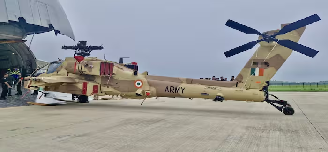

An Army AH-64 Apache attack helicopter crashed in turbulent waters off the waters near the Strait of Hormuz, according to an article published by The New York Times citing two individuals who had knowledge of the case. The crew members aboard were both rescued following the incident.
Although the cause of the helicopter’s crash is unknown, experts said they are investigating the possibility that the aircraft was hit by hostile fire from Iran, had mechanical troubles, or had some other problem. This comes as there has been significant hostility in the region due to ongoing skirmishes in the wake of a series of direct exchanges between Israel and Iran.
Escalating air losses as part of a war over shipping lanes
The loss of the Apache was caused by the need to operate aggressively in order to prevent Iran from controlling the movement of commercial shipping through the crucial chokepoint. The military has employed a strong air umbrella involving helicopters, drones, and fighter aircraft to secure the waterway.
The ongoing conflict that erupted in mid-February has already resulted in significant losses for America’s drone and manned aviation capabilities. According to reports, Iran managed to shoot down around 30 MQ-9 Reaper drones since the start of the fighting, with some US fighter planes being destroyed because of either enemy or friendly fire. Should the report about the destruction of this helicopter by hostile forces prove true, it will be the first loss for America of an AH-64 Apache in this conflict.
The significance of such operations was illustrated recently by the fact that the head of the US Central Command published pictures of himself touring the waterway by helicopter. Such reconnaissance operations were undertaken to pave the way for a large US Navy operation, called Project Freedom, that involved escorting civilian vessels across the strait.
The assertive stance and naval blockade of the Strait of Hormuz
With a set of laser-guided Hellfire missiles on board, the AH-64 Apache is among the most heavily armed platforms operating in the region. American military commanders use this helicopter to conduct aerial patrols of the strait, deter aggressive actions of small fast-attack boats, and intercept any suspicious unmanned vehicles.
In the last few weeks, Apache teams have been working closer to islands under Iranian control in the Strait of Hormuz as well as in the Persian Gulf in general. This aggressive stance has persisted despite attempts made by both countries to initiate back-channel talks in hopes of restoring the blocked passage.
The incident involving the aircraft has come about as part of a tough naval and economic strategy against the Islamic Republic. As was reported in April, the United States has put into effect stringent restrictions against access to Iranian ports, as a result of which over 130 boats were denied entry by the U.S. Navy and some vessels were immobilized after being warned against continuing their journey.
This mission carried out by the Apache crew is reminiscent of the previous high-profile operation to save the crew members who had been aboard the F-15E Strike Eagle aircraft downed by Iran earlier this year.