
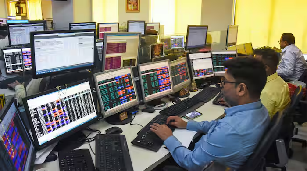

Markets were trading lower on Wednesday amidst fresh tensions between US and Iran. Domestic equities declined up to 1 percent during morning trade. The BSE Sensex fell 816 points or 1.09 percent to 73,833 in early trade. The NSE-Nifty also declined 200 points or 0.86 percent to 23,280.
Technology stocks emerged as the biggest drag among sectoral indices. Nifty IT slumped nearly 4 percent. Nifty MidSmall IT & Telecom index fell nearly 2 percent. Realty, financial services, PSU banking and media stocks were also under pressure.
Mid-cap and small-cap indices dropped up to 1 percent. India VIX jumped over 8 percent.
Tata Consultancy Services Ltd (TCS) dropped around 6 percent. Tech Mahindra, Infosys and HCLTech declined up to 4 percent among Nifty constituents. Bajaj Finserv, Axis Bank and Shriram Finance were among the top losers of the benchmark index.
“Lower bollinger band support helped prices swing higher from the opening low yesterday, while the gains were limited to the 23500, on expected lines. If the dips are contained in the 23400-380 region today, a renewed push towards 23700 could be seen. Inability to do so should expose 23126-22800 again,” Anand James, Chief Market Strategist, Geojit Investments Limited said.
Escalation in the Middle East conflict meanwhile has driven Brent crude back toward $97, resulting in further tensions in India’s energy crisis. The rupee has weakened further, hitting 95.26 against the US dollar.
“The sustained fall in the rupee has been arrested for now but the rising current account deficit and sustained FPI outflows are areas of concern. The RBI commentary and actions on June 5th will be keenly watched by the market,” VK Vijayakumar, Chief Investment Strategist, Geojit Investments Limited said.
“In contrast, in India earnings growth in FY 27 will be modest weighed down by lower growth and higher inflation. All these factors have impacted sentiments in the market. The saving grace is the confidence shown by the retail investors who continue to invest money despite the headwinds. Even though the sustained FPI outflow is a strong headwind, the fair valuations, the recovery in earnings growth reflected in Q4 numbers and the strong domestic flows can impart resilience to the market,” Vijayakumar added.