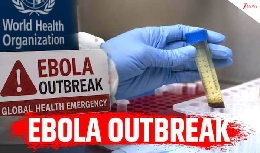

Amid the worsening global crisis and increasing concerns regarding the rapid spread of the deadly virus, the Russian government revealed that its scientists had created a vaccine specifically targeting a rare strain of the Ebola virus. The discovery comes amidst an outbreak of the Bundibugyo ebolavirus that threatens the entire Democratic Republic of Congo (DRC) as well as neighboring Uganda.
Russia’s Health Minister Mikhail Murashko revealed that the new vaccine formula was created to prevent infection from the rare and hard-to-target Bundibugyo strain. As of now, there exist no official vaccines or therapies targeting that particular strain of the disease.
Outbreak escalates as WHO declares a global health emergency
The timing of the Russian announcement came after an official decree from the World Health Organization (WHO). In its decision, the agency declared the outbreak in Central Africa as a Public Health Emergency of International Concern (PHEIC). Noting serious transmission routes, the WHO recently increased the level of risk from an outbreak in the DRC from high to very high.
Based on current epidemiological statistics, the number of confirmed patients infected in the ongoing outbreak has surpassed 80 individuals, and several dozen deaths have been reported, alongside hundreds more cases that are currently under strict laboratory monitoring and isolation.
The missing link in current global Ebola arsenal
Members of the genus Orthoebolaviruses result in life-threatening, hemorrhagic diseases in human beings. According to historical data compiled by the WHO, Ebola outbreaks carry deadly case-fatality ratios between 25% and 90%, which depend upon the specific pathogen’s species and availability of intensive supportive treatment.
Although breakthrough technologies such as Ervebo, used in ring vaccination techniques to protect close contacts during the initial outbreaks, enabled scientists to contain previous Ebola cases successfully, current defense capabilities are only limited in scope.
Monopoly on Zaire strain vaccines: All fully licensed global vaccines, such as Ervebo, Zabdeno, and Mvebea, have been formulated specifically for addressing the prevalent Zaire strain.
Zero cross-protection: None of these already available vaccines have been clinically proven to effectively tackle the specific genetic composition of the Bundibugyo strain, thus rendering the global health team incapable of responding effectively to the present outbreak situation.
Transparency and scientific scrutiny required by global experts
The Russian Embassy in South Africa’s declaration has, without doubt, generated an unprecedented amount of excitement among global health practitioners; however, experts have taken their time in formulating responses.
At present, Russia has not made any of the human clinical trial parameters, protocols, and peer-reviewed research data publicly available in independent journals. As per experts’ suggestions, all potential vaccine candidates need to meet rigorous approval criteria to ensure their safety, potent immune response capabilities, and effectiveness before inclusion in the global arsenal.
Moreover, competitive vaccine contenders such as those from the Oxford Vaccine Group and the University of Texas Medical Branch are currently being evaluated. In order to support their scientific claims, Moscow has officially offered advanced diagnostic kits and field medical support teams to assist frontline containment operations in both the Congo and Uganda