
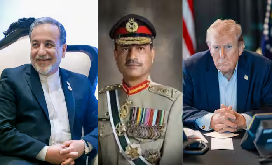

Iran’s Consulate General in Mazar-e-Sharif confirmed that Pakistan’s Chief of Defence Forces, Field Marshal Asim Munir, arrived in Tehran, signaling continued diplomatic engagement between the US and Iran amid the ongoing tensions. Meanwhile, Iran’s Foreign Ministry spokesperson Esmaeil Baghaei acknowledged fundamental disagreements between Tehran and Washington.
He reiterated Iran’s position based on a 14-point plan previously shared with the US.
Baghaei explained that Iran avoids discussing nuclear details due to past negative experiences.
“The reason we don’t talk about the details of nuclear-related discussions is clear. We have done this twice, and the other party’s greed led us into war. We cannot ignore this experience,” he said, as quoted by Al Jazeera.
He affirmed Iran’s commitment to the Nuclear Non-Proliferation Treaty (NPT), stating that the country has the right to peaceful nuclear energy.
Baghaei added that peace negotiations with the US are not close, describing the divide as “deep and significant.” He noted that it remains uncertain whether a deal could be reached in weeks or months.”
The focus of the negotiations is on ending the war. Details related to the nuclear issue are not being discussed at this stage,” Baghaei emphasised.
US signals firm stance on Iran
While in Washington, US President Donald Trump stated that Iran is eager to reach a deal but stressed that Washington had no choice but to act decisively.
“Iran is dying to make a deal. We will see what happens, but we hit them hard and we had no choice because Iran cannot have a nuclear weapon,” Trump said.
He also referenced his previous regulatory policies from his first term.
Meanwhile, US Secretary of State Marco Rubio revealed that he held consultations with NATO allies on possible contingencies to restore navigation through the Strait of Hormuz.
Speaking at a ministerial summit in Helsingborg, Sweden, Rubio stressed the need for operational readiness.
“We have to have a plan B for if someone is shooting” in the critical waterway, he said. Rubio cautioned that Iran might refuse to reopen the strait, requiring alternative measures.
Iran accuses US of ‘excessive demands’
Iran’s Foreign Minister Abbas Araghchi told United Nations Secretary-General Antonio Guterres that Washington’s “excessive demands” remain the primary obstacle to peace negotiations.
In a telephone conversation, Araghchi noted that the US has repeatedly undermined diplomacy through broken promises, contradictory positions, and military actions, yet Iran continues to participate in truce talks.
Guterres rejected the use of force against any state’s sovereignty and urged all parties to pursue diplomacy to restore regional stability.
Trump administration prepares for possible new strikes
According to CBS News, citing sources familiar with the planning, the Trump administration was preparing for a new round of military strikes against Iran on Friday. However, no final decision had been made.
Several senior US military and intelligence officials cancelled their Memorial Day weekend plans in response to the developments.
President Trump, who had intended to spend the weekend at his golf property in New Jersey, is now expected to return to the White House.
Trump also announced that he will not attend his son Donald Trump Jr.’s wedding to Palm Beach socialite Bettina Anderson due to pressing government responsibilities.
In a post on Truth Social, he expressed regret while emphasising his commitment to the nation.”While I very much wanted to be with my son, Don Jr., and the newest member of the Trump Family, his soon-to-be wife, Bettina, circumstances pertaining to Government, and my love for the United States of America, do not allow me to do so,” Trump wrote. “I feel it is important for me to remain in Washington, D.C., at the White House during this important period of time.”
US-Iran talks hit a deadlock, Munir’s increased efforts to churn a deal, while the US, on the other hand, prepares for renewed strikes as Iran calls out Washington’s ‘excessive demands’. With these parallel developments, the prospect of a swift resolution appears increasingly distant, raising concerns about further escalation in the region.