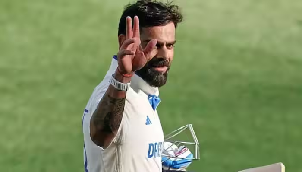

Virat Kohli announced his test retirement one year back following India’s 1 to 2 Test series defeat in South. This major development occurred just months after he stepped away from the T20I leadership position and was subsequently replaced as the ODI captain. His exit signified the conclusion of a highly impactful seven year stint as India’s Test leader, a tenure during which he guided the national side to 40 victories across 68 matches.
Now, more than four years after resigning as the most successful Test captain in the nation’s history, Kohli has opened up regarding the factors that drove his choice. Even though India enjoyed immense success under his guidance, the relentless pressures of the captaincy eventually took a significant toll. As his individual batting form experienced a decline and India missed out on securing a historic Test series triumph on South African soil, Kohli concluded that it was the correct moment to step down from the helm.
During the RCB Innovation Lab on Tuesday, Kohli explained how the combination of being the premier batsman and the primary leader became an overwhelming weight.
“I ended up being in a place where I became the focal point of our batting unit and the focal point of leadership. I didn’t realise how much of load both those things will present in my daily life, to be honest. But because I was so driven to just make sure that Indian cricket stays on top, I didn’t really pay attention to it. And that’s precisely why by the time I left captaincy, I was completely spent. There was nothing left in the tank. I was completely consumed by it. It was gruesome,” Kohli said during the RCB Innovation Lab on Tuesday.
A Historic Journey of Red Ball Leadership
Kohli’s maiden experience leading the Indian Test team occurred during the 2014 Adelaide match against Australia, stepping in after MS Dhoni was sidelined due to a thumb injury. India fought valiantly to conquer the hosts, propelled by Kohli slamming centuries in both innings, though an abrupt batting collapse ultimately derailed the run chase.
In August of the next year, a 26 year old Kohli captained his very first full series and steered India to a historic series victory in Sri Lanka, which was the team’s first series win on Lankan soil since 1993. This triumph laid the foundation for the highly successful Kohli and Ravi Shastri partnership. Under their watch, India claimed the prestigious ICC Test mace for five consecutive seasons and achieved a monumental milestone by defeating Australia in their own backyard to capture the 2018–19 Border-Gavaskar Trophy.
However, as the years progressed, Kohli recognized that he had drifted away from his own well-being. Because the massive obligations of leading the national team left virtually no personal time, walking away from the captaincy ultimately felt like the healthiest choice.
“The reason you’re given a leadership role is because people believe you can take on more and still manage it. In many ways, leadership is more about management than even coaching. It’s about understanding the people playing with you and for you, and figuring out how to get the best out of them. To do that, you constantly have to be in a space where you’re not focused on yourself. You don’t even think about whether someone is going to ask you, ‘Are you okay? That thought doesn’t even cross your mind,” added Kohli.
The veteran batsman concluded with a poignant reflection on the isolation that often accompanies high profile leadership roles.
“But towards the end of my captaincy tenure, I did look back and realise that no one had really asked me that question for almost nine years – How are you doing?”