
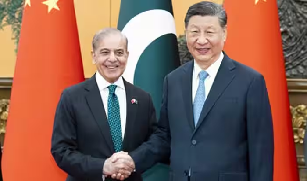

Over a year after the India-Pakistan conflict, an explosive report by DropSiteNews has revealed that Islamabad had sought nuclear second-strike capability from China to counter India, in lieu of the Gawadar port access. However, the same did not materialise following China’s apprehensions related to nuclear policy. According to the report, Pakistan had given assurance to China for a permit to convert the deep-water port at Gwadar into a permanent military facility for Beijing.
Classified Pakistani military records, obtained and reviewed by investigative outlet Drop Site News, have exposed a fractured, high-stakes negotiation between Islamabad and Beijing. According to the secret defence documents, Pakistani negotiators drafted a specific list of preconditions before they would greenlight the Chinese base at Gwadar.
First, Islamabad demanded a total geopolitical guarantee, asking China to legally protect and indemnify Pakistan against the inevitable economic, diplomatic, or political sanctions from the United States that would follow the establishment of a Chinese military footprint. Second, they sought extensive modernisation support to ensure the Pakistani armed forces and intelligence networks could maintain strategic parity with India’s rapidly advancing military capabilities.
The most explosive condition, however, was a request for a sea-based nuclear second-strike capability—typically deployed via nuclear-armed submarines. This capability represents the ultimate layer of a nuclear nation’s deterrence strategy, ensuring the ability to launch a retaliatory strike even if land-based missiles are destroyed. Pakistan has spent more than twenty years trying to develop this technology independently.
China Drew a Red Line
Despite their close ‘iron brother’ alliance, Beijing refused to cross the nuclear threshold. According to the report, the bilateral discussions stated that Chinese officials viewed the second-strike demand as a direct and dangerous step into regional nuclear proliferation. Yielding to Islamabad’s request would have flagrantly violated Beijing’s own international nonproliferation commitments.
Furthermore, Chinese leadership calculated that the global backlash and international penalties they would face for transferring such sensitive technology far outweighed any strategic advantage gained from securing the facility, which is widely believed to be located at the Gwadar port.
Pakistan’s Failed ‘Begging’ Attempt
Notably, cash-strapped Pakistan tried to woo China for funding in 2024 but could not secure any assistance. The bilateral relationship between Islamabad and Beijing faced visible hurdles in 2024, underscored by Prime Minister Shehbaz Sharif’s inability to secure additional funding during his capital visit. Financial friction persists due to Pakistan’s significant outstanding dues to Chinese energy firms. Compounding these economic tensions are acute security challenges; Chinese Ambassador Jiang Zaidong issued a rare public statement in 2024 expressing deep concern over the safety of Chinese nationals, 21 of whom have lost their lives since the commencement of CPEC initiatives.