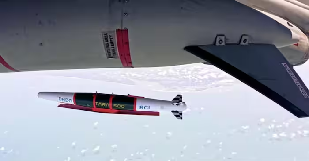

India has successfully conducted the maiden flight-trial of the Tactical Advanced Range Augmentation weapon, known as TARA, off the coast of Odisha, the government announced on Friday. The test marks a significant step in India’s push to develop indigenous precision strike capabilities without relying on foreign technology.
TARA is a modular range extension kit, in simpler terms, a system that can be attached to an existing unguided warhead and transform it into a precision-guided weapon. It is the first glide weapon of its kind to be developed entirely in India, designed and built by the Research Centre Imarat in Hyderabad alongside other DRDO laboratories and Indian industry partners. Production activity has already begun.
Maiden flight-trial of Tactical Advanced Range Augmentation (TARA) weapon was successfully conducted off the coast of Odisha on May 07, 2026.
The weapon has been developed to enhance both the accuracy and the lethality of low-cost munitions used to strike ground-based targets. Its significance lies not just in what it does, but in how affordably it does it. TARA is the first glide weapon to use state-of-the-art low-cost systems, making precision guidance accessible at a price point that conventional guided weapons have rarely achieved.
Defence Minister Rajnath Singh congratulated DRDO, the Indian Air Force, Development cum Production Partners and the wider industry on the successful trial. Dr Samir V Kamat, Secretary of the Department of Defence R&D and Chairman of DRDO, also extended his congratulations to the teams involved.
The Broader Push For Indigenous Defence
The TARA test comes against the backdrop of a wider effort to deepen India’s domestic defence manufacturing base. Speaking at the North Tech Symposium in the same week, a three-day event organised by the Indian Army’s Northern and Central Commands and the Society of Indian Defence Manufacturers, Rajnath Singh said the government had placed defence research at the heart of its priorities.
He noted that DRDO had already transferred 2,200 technologies to various industries and that 25 per cent of the defence R&D budget had been allocated to industry, academia and start-ups. Those entities have collectively utilised over Rs 4,500 crore of that budget to date.
Singh also stressed the importance of maintaining the element of surprise in an era of rapid technological change, telling the gathering of defence personnel, industry leaders and innovators that sustained investment in research was the only reliable way to stay ahead.