
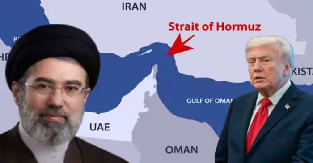

Iran said that it will allow only 15 vessels per day to pass through the Strait of Hormuz, Tass news agency reported, citing a senior Iranian source
Earlier, just hours before the scheduled Iran-US talks on a proposed ceasefire, Iran rejected a short-term truce plan, citing violations of three key provisions.
In a post on X, Iran’s Parliament Speaker Mohammad Bagher Ghalibaf listed the alleged breaches in the 10-Point Proposal (Agreed Framework), failure to uphold the Lebanon ceasefire, a reported drone intrusion into Iranian airspace, and denial of Iran’s right to enrichment.
Talks between the United States and Iran are scheduled to be held on Friday in Pakistan, aimed at building on a two-week ceasefire announced on April 7.
Israel’s airstrikes on Lebanon
The development comes after Israel launched coordinated airstrikes on Hezbollah targets in Lebanon on Wednesday, despite the US-backed truce.
The Israeli Defense Forces (IDF) said over 100 sites were struck across Beirut, the Beqaa Valley, and southern Lebanon in a brief operation involving dozens of fighter jets.
Targets included command centers, intelligence facilities, weapons infrastructure, naval assets, and positions linked to elite units such as the Radwan Force and Aerial Unit 127.
Why Israel continued strikes
Israel said the US-Iran ceasefire does not apply to Lebanon. Prime Minister Benjamin Netanyahu stated operations would continue, a position echoed by military spokesperson Avichay Adraee, who said “the battle in Lebanon continues.”
In response, Iran moved to shut down the strategically vital Strait of Hormuz.
US-Iran ceasefire
US President Donald Trump on April 7, announced a two-week pause in military action.
US-Israel vs Iran war
The war between the US–Israel vs. Iran started after the US–Israel launched a joint and surprise airstrike on February 28, killing Iran Supreme leader Ayatollah Ali Khamenei and several senior top Iranian officials. Iran retaliated by targeting US military bases and restricting access to the Strait of Hormuz, which handles nearly 20 percent of global oil shipments. Tehran later allowed limited passage for certain countries, including China, Russia, India, Pakistan, and Iraq.
How Lebanon entered the US-Israel vs Iran war
Hezbollah entered the US by launching missiles and drones toward Israel, targeting military sites, including a missile defense installation south of Haifa. Israel responded with intensified airstrikes across Lebanon, including Beirut’s southern suburbs.
Lebanon’s government distanced itself from Hezbollah’s actions. Prime Minister Nawaf Salam called the strikes “irresponsible,” saying they were carried out without state approval.