

The United Arab Emirates (UAE) is reportedly willing to join the conflict in the Middle East, with the US and Israel on one side and Iran on the other, and is preparing to assist the United States and other allies in reopening the Strait of Hormuz by force, according to a Wall Street Journal report citing Arab officials.
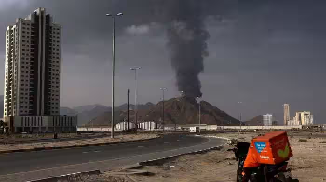
This development comes amid ongoing Iranian strikes on the UAE and other Gulf states in retaliation for US‑Israeli operations on Iranian territory.
If materialises, this would make the UAE the first Persian Gulf nation to join the war directly. This also follows US President Donald Trump’s criticism of allies for not contributing enough to the US campaign against Iran, telling them to “get your own oil” and asserting that securing the Strait of Hormuz is not America’s duty.
UAE’s push for UNSC resolution
Citing the Emirati officials, report said, the UAE is also pushing for or a United Nations Security Council (UNSC) resolution to authorize such action against Iran.
According to the report, the country’s diplomats have called on the US and military powers in Europe and Asia to form a coalition to reopen the Strait of Hormuz by force.
UAE official also said that the Iranian regime, believing it is defending its survival, is prepared to threaten the global economy with it in a chokehold on the strait.
The UAE reportedly believes that hesitant Asian and European countries might join efforts to secure the Strait of Hormuz if the UN Security Council approves the plan.
While Russia and China could block such a resolution, Gulf officials told the Wall Street Journal that the UAE would remain prepared to support the military operation, potentially including mine clearance and other assistance.
The UAE has also reportedly proposed that the US take control of islands in the strait, such as Abu Musa, which Iran has occupied for nearly five decades but is claimed by UAE.
In its statement, the UAE foreign ministry pointed to a separate UN resolution condemning Iran’s attacks on its cities, as well as a resolution from the International Maritime Organization denouncing the closure of the Strait of Hormuz.
UAE’s increasingly assertive approach marks a significant shift in its strategic policy, according to the officials. Prior to the war, Emirati diplomats sought to mediate between the US and Iran, including hosting Iranian national security official Ali Larijani in Abu Dhabi, who was later killed in an airstrike.
The UAE is now aligning with Trump’s call for allies to assume greater responsibility in the conflict, particularly in efforts to reopen the Strait of Hormuz.
According to the report, Saudi Arabia and other Gulf states are also hardening their stance against Iran’s leadership, seeking a resolution that weakens or removes it, though they have not yet deployed their forces. Bahrain, a close US ally and host of the US Navy’s Fifth Fleet, is supporting the UN resolution, with a vote expected on Thursday.
‘Dubai and Abu Dhabi could be blown up’: US economist
Earlier on March 29, leading US economist Jeffrey Sachs has warned the United Arab Emirates against entering the war, stressing the immediate risks to Dubai and Abu Dhabi, which are built as tourist hubs rather than secure military zones.’
Sachs argued that the UAE has entangled itself in an “absurd mess” and is continuing to “double down” on its errors through its alignment with the US and Israel, news agency ANI reported.
“Basically, Dubai and Abu Dhabi could be blown up if the UAE gets into the war. These are resort areas. These are tourist destinations. These are not fortified missile defence areas. These are places where rich people are going to party and put their money. And to enter a war zone is to defeat the entire purpose of a place like Dubai. The Emirates got itself into an absurd mess with its eyes open. And it keeps doubling down, by the way,” he said.
Sachs described the Gulf nations’ decision to align with the US via the Abraham Accords as an “invitation for disaster,” increasing their reliance on American protection and creating what former US Secretary of State Henry Kissinger called a “fatal friendship.”