
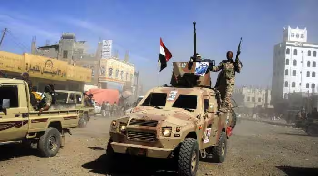

Yemen’s Iran-backed militia group ‘Houthis’ launched a ballistic missile attack targeting southern Israel on Saturday morning, triggering air‑raid sirens in Beersheba and surrounding areas.
It was the first offensive from the Iran‑aligned group since the war with Iran began on February 28.
In a statement, the Houthis claimed responsibility for the attack, saying they had targeted “sensitive Israeli military sites” with a “barrage of ballistic missiles,” as per the Times of Israel.
The IDF said that one missile fired from Yemen was successfully intercepted by air defences.
The strike came a day after the group warned it was ready to intervene militarily if other countries joined the United States and Israel in their campaign against Iran, or if the Red Sea was used to launch attacks on the Islamic Republic, according to a report by Reuters.
“We confirm that our fingers are on the trigger for direct military intervention” if any new alliances join Washington and Israel against Iran and its allies, or if the Red Sea is used for “hostile operations” against Iran, the rebel group’s military spokesperson Yahya Saree said in a televised address late Friday evening, the report added.
Saree also said the Houthis were prepared to act if, in his words, the escalation against Iran and the “axis of resistance” continued, but he did not specify what form any intervention would take.
Iran’s Shi’ite allies in Lebanon and Iraq have already joined the war in the region triggered by U.S. and Israeli strikes on Tehran. Until now, the Houthis had not announced any direct entry into the conflict, despite their military capabilities and their strategic location overlooking the Red Sea.
Bab el-Mandeb at risk?
With Houthi’s entry into the war dramatically raising the stakes for Bab el‑Mandeb, a historic chokepoint that has long served as a key east–west trade route.
The narrow, 29‑km‑wide strait was already perilous because of crosscurrents, unpredictable winds, reefs and shoals.
Crude oil, diesel, natural gas, other petroleum products and bulk commodities from the Middle East and India still move through the Red Sea on their way to and from Europe, as it remains the shortest route.
Western sanctions on Russia after its full‑scale invasion of Ukraine in 2022 also turned the Red Sea into a vital artery for crude moving in the opposite direction, as Moscow now sells most of its oil to Asian markets.
From the Houthis’ point of view, any further escalation allows them to inflict sharper economic pain, especially now that the Strait of Hormuz, the other critical Middle Eastern shipping chokepoint, has been largely shut off by the US-Iran-Israel war.
Keeping Bab el‑Mandeb open is particularly crucial for Saudi Arabia, a key US ally, which has relied on a pipeline across the Arabian Desert to the Red Sea port of Yanbu to maintain a significant share of its oil exports.
Many of these tankers must sail past Yemen to pick up their cargoes and then head back south through Bab el‑Mandeb to reach the Arabian Sea.