
A day after Donald Trump spoke with Prime Minister Narendra Modi on the escalating situation in West Asia, the government on Wednesday informed leaders across political parties that India has urged de-escalation. According to officials, Modi conveyed to Trump that India “wants to see the war coming to an end” as it is “affecting everyone”.
The briefing came during an all-party meeting chaired by Defence Minister Rajnath Singh, aimed at building political consensus on the conflict and India’s response. However, opposition parties remained unconvinced, with the Congress demanding a detailed discussion in both Houses of Parliament on the crisis and the government’s foreign policy stance.
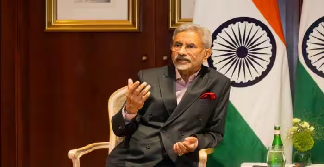
External Affairs Minister S Jaishankar addressed concerns over Pakistan reportedly acting as a mediator between the US and Iran. He stated that this was not a new development, noting that Pakistan had played a similar role since 1981. Jaishankar was also quoted as saying that India cannot be “a dalal nation” pursuing other countries to offer mediation services.
He further remarked that if the situation were to be interpreted as a failure of India’s foreign policy today, it would equally apply to earlier periods. The government also sought to reassure political leaders that India has sufficient reserves of oil and gas, urging that there was no cause for alarm.
The meeting was attended by several senior ministers, including Home Minister Amit Shah, Finance Minister Nirmala Sitharaman, Petroleum Minister Hardeep Singh Puri, Health Minister J P Nadda, and Parliamentary Affairs Minister Kiren Rijiju.
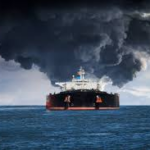
At the outset, Foreign Secretary Vikram Misri presented an overview of developments in West Asia, highlighting the strategic significance of the Strait of Hormuz.
The backdrop of the meeting includes heightened tensions following the reported assassination of Ayatollah Ali Khamenei and other recent incidents, which have intensified political divisions domestically. Despite the government’s outreach, opposition leaders indicated that further parliamentary scrutiny would be necessary.