
Iran has rejected US President Donald Trump’s 48-hour ultimatum, asserting that the Strait of Hormuz will remain open to all vessels except those it considers “enemies.”
Tehran clarified that foreign ships may continue to transit the strategic waterway, provided they coordinate with Iranian authorities for security. Iran’s Ambassador to the United Kingdom, Ali Mousavi, reiterated the position, stating that the “Strait of Hormuz is only closed to Iran’s enemies.”
Mousavi, who also serves as Iran’s envoy to the United Kingdom, emphasised that while transit remains possible, international obligations must be balanced with respect for “Iran’s territorial integrity and rights.” He indicated that Tehran remains prepared to engage with the IMO and various nations to enhance maritime safety protocols and ensure the protection of seafarers operating in the region.
Since the outbreak of the Middle East conflict, Iran has effectively restricted maritime traffic through the Strait and carried out attacks on multiple vessels. Tensions have been further exacerbated by repeated attacks on regional energy facilities and commercial shipping since the conflict began. Iran has maintained a hardline stance, previously declaring it would not allow “even a single litre of oil” bound for the United States, Israel, or their allies to pass through the waterway.
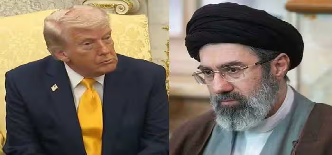
Earlier, President Trump issued a stark warning, threatening strikes on Iranian energy infrastructure if Tehran fails to fully reopen the Strait within 48 hours.
In a social media post, the President declared, “If Iran doesn’t fully open, without threat, the Strait of Hormuz, within 48 hours from this exact point in time, the United States of America will hit and obliterate their various power plants, starting with the biggest one first! Thank you for your attention to this matter.”
The ultimatum comes amid growing domestic and international pressure on the Trump administration as global oil prices surge. The volatility is largely attributed to disruptions in the Strait of Hormuz, a critical chokepoint through which roughly 20 per cent of the world’s oil and gas supply passes.
The human cost so far
The conflict began on February 28 following a joint US-Israel strike that reportedly killed Supreme Leader Ayatollah Ali Khamenei and several senior Iranian officials. Iran retaliated with missile and drone attacks targeting US military installations across West Asia, including sites in Iraq, Qatar, the UAE, Bahrain, Kuwait, and Saudi Arabia.
More than 2,300 people have been killed in Iran since the fighting began, including over 1,300 civilians. Nearly 200 of the dead are children under the age of 12.
Iranian officials have since indicated they may halt strikes on neighbouring countries, provided those nations are not used as bases for attacks against Iran.