
US Energy Secretary Chris Wright said that the International Energy Agency has unanimously agreed to the release of 400 million barrels of oil and refined products from their respective reserves.
In a statement issued on Wednesday, US Secretary of Energy Chris Wright said, “Earlier today, 32 member nations of the International Energy Agency unanimously agreed to President Trump’s request to lower energy prices through a coordinated release of 400 million barrels of oil and refined products from their respective reserves,” the US Department of Energy said in a statement.
Wright added that as part of this effort, the US will release 172 million barrels from the Strategic Petroleum Reserve, beginning next week.
“As part of this effort, President Trump authorized the Department of Energy to release 172 million barrels from the Strategic Petroleum Reserve beginning next week. This will take approximately 120 days to deliver based on planned discharge rates,” the statement read.
Experts say the record release by the IEA, including 172 million barrels from the US Strategic Petroleum Reserve, is an emergency step aimed at stabilising oil markets disrupted by the conflict in West Asia. However, some experts warn that the move is only a short-term solution and does not resolve deeper supply constraints in the global energy market.
What is the International Energy Agency?
The International Energy Agency (IEA) is an independent intergovernmental organization headquartered in Paris, France. It was established in 1974 to ensure reliable, affordable, and clean energy. It currently includes 32 member countries. Among its founding and most influential members are the United States, Japan, Germany, France, and the United Kingdom.
Iran attacks tankers in the Strait of Hormuz
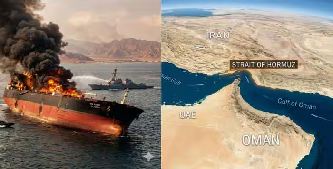
The initiative comes as the war in West Asia continues to disrupt oil supply, with several incidents involving ships in and around the Strait of Hormuz.
Earlier this week, boats believed to be operated by Iranian forces and loaded with explosives attacked two fuel tankers in Iraqi waters, setting the vessels on fire and killing one crew member.
According to reports, at least 16 ships have been struck in the region since the conflict escalated.
Shipping activity across the Gulf and the Strait of Hormuz, through which roughly one-fifth of the world’s oil supply passes, has slowed significantly since the United States and Israel launched strikes on Iran on February 28. The disruption has pushed global oil prices to their highest levels since 2022.
West Asia war
Recent tensions between Iran, Israel, and the United States have raised serious concerns about stability in West Asia. The situation escalated after reports of joint U.S. and Israeli strikes targeting locations in Iran on February 28, during which Iran’s Supreme Leader, Ayatollah Ali Khamenei, was reportedly killed. The incident has significantly heightened regional tensions and raised concerns about potential disruptions to global oil supplies.