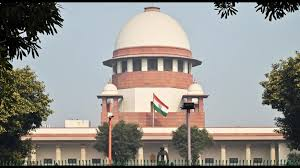

The Supreme Court of India ruled that a person’s “creamy layer” status within the Other Backward Classes (OBC) cannot be decided just by looking at their family income. The court stated that other factors, such as the type of job and social status, must also be considered.
“Determination of creamy layer status solely based on income brackets, without reference to the categories of posts and status parameters, is clearly unsustainable in law,” the top court observed.
What is the ‘Creamy Layer’ in OBC reservation?
The term “creamy layer” refers to members of the Other Backward Classes (OBCs) who are socially and economically advanced. Because they are considered better off than others in their community, they are not eligible for reservation benefits in government jobs or educational institutions.
The goal of this rule is to make sure that reservation benefits go to the poorest and most disadvantaged people within the OBC category.
What are the current rules for the creamy layer?
The rules for identifying the creamy layer were established in 1993. While income is a key part, it’s not the only one.
- Income Limit: Currently, an OBC family with an annual income of more than ₹8 lakh is generally considered part of the creamy layer. This limit was last revised in 2017.
- Other Factors: A person can also be included in the creamy layer if their parents hold high-ranking positions, such as:
- Constitutional posts (like President, Supreme Court judges).
- Senior government jobs (Group A/Class I officers).
- High-ranking roles in the armed forces.
- Families with significant business income or large properties are also considered.
Why the ruling matters?
The income limit was last increased in 2017 from Rs 6 lakh to Rs 8 lakh. However, many groups have argued that income alone is a poor way to measure social progress.
This new Supreme Court ruling ensures that the government follows a more balanced approach, looking at both money and social standing to decide who gets reservation help and who does not.