
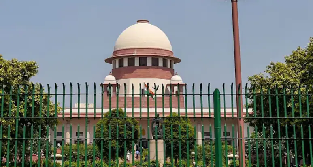

The Supreme Court refused to hear a public interest litigation, or PIL, against a new law allowing Income Tax Department officers to search and seize personal electronic devices.
The plea challenged the constitutional validity of expanded search-and-seizure powers proposed under the Income Tax Act of 2025, particularly provisions enabling searches of ‘computer systems’ and ‘virtual digital space’, which has been read to include personal electronic devices, cloud infrastructure, and electronic communications.
The court said the petitioner – entrepreneur Vishwaprasad Alva – could approach concerned authorities with representation for clarification of the law that will come into effect on April 1.
The main concern raised by the petitioner was regarding the provision exempting officials from disclosing the reasons for the search to the assessee or Income Tax Appellate Tribunal.
The petitioner also questioned the clauses in Section 132 of the 1961 Act (Section 247 of the new Act) that permit search and seizure on the belief that a person ‘will not’ or ‘would not’ produce documents if summoned, or that assets ‘would not be disclosed’ for tax purposes.
Appearing for the petitioners, Senior Advocate Sanjay Hegde argued the new law would cause unnecessary harassment to tax payer. “… while I concede reasons need not be disclosed in advance, there should be a mechanism by which reason should be within in the institution so it can later relied upon,” he said, referring to a Comptroller Auditor-General report on the section.
Hegde argued that these provisions create an ‘anticipatory search framework’ in which highly intrusive powers could be exercised without any existing violation of law.
“Also my lords.. a system can be made better so assesses are not unnecessarily harassed.”
Section 247 permitted searches of ‘computer systems’ and ‘virtual digital space’, including personal digital devices, cloud servers, and electronic communications.
The top court, while noting that it appreciated the petitioner’s concerns, refused to accept the argument of unconstitutionality, pointing out that judicial review by the High Court is not barred.
“We fully understand your concern that it would have been better if Section 249 was not there and it was available to superior officers or at any stage in 143 proceedings. Nonetheless, when there is a scope of judicial review, we cannot say that the provision is unconstitutional. We cannot second-guess the wisdom of the Parliament,” Justice Joymalya Bagchi said.
And Chief Justice Surya Kant, heading the bench, suggested the petitioners’ concern is an “initial apprehension” and noted that some search-and-seizures “are innocuously made, which looks like it (the new law) can be misused”. Court may have to examine it later, he admitted.
“But often it is streamlined,” he said, “These actions are often for the big tax evaders…”
The court recorded: “Petitioner seeks to withdraw as he wants to approach competent authority in Government of India as he seeks clarification of Section 249 of IT Act 2025 (S. 132 in old Act).”
What is the plea?
At the core of the plea is the expansive definition of ‘computer systems’.
According to the petition, the provision effectively permits IT officials to access personal laptops and mobile phones, as well as emails, private chats, cloud-stored data, and electronic communications on those devices and those stored on remote servers.
The new law even allows officials to override passwords and access controls.
The petitioner argued that this represented an unprecedented extension of traditional search-and-seizure powers into the digital sphere. Digital devices differ qualitatively from physical documents, he argued, noting they often vast volumes of sensitive and confidential data.
Such data, he argued, could extend well beyond the scope of any tax inquiry.
Allowing unfettered access to such data, without prior judicial authorisation, equals a grave invasion of privacy of personal information as protected under Article 21 of the Constitution.
Authorising full-scale digital searches on speculative grounds, the petitioner submitted, fails the constitutional test of proportionality and necessity.