
As the high-intensity conflict in West Asia enters its second week, Iran’s Integrated Air Defence Network (IADN) is reportedly in catastrophic architectural collapse. This is following a devastating wave of US and Israeli air campaigns that commenced on February 28.
As military analysts have pointed out, Iran’s supposedly “impenetrable” air defence network has been shredded in the face of an unprecedented onslaught of precision-guided munitions.
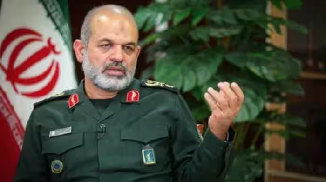
“In an effort to shore up the sagging regime, Brigadier General Ahmad Vahidi, an ultra-hardline military strategist with a notorious international reputation for ruthlessness, has been appointed as the new Commander-in-Chief of the Islamic Revolutionary Guard Corps (IRGC),” an intelligence brief stated.
The ruins of a shield: Iran’s air defence in shambles
By March 1, the Israeli Air Force (IAF) had declared air superiority over Iran. Military analysts have pointed out that Iran’s air defence network is presently in a state of near-collapse.
S-300 / S-400 failure: Russian-made batteries around Tehran and Isfahan have been largely neutralised in the initial salvos.
Reports have indicated that Western forces have been using data from S-300 defense systems in Ukraine and Greece for the past years to create the perfect electronic countermeasures.
Bavar-373 degradation: The Iranian defense system has been systematically degraded in Western Iran, eliminating the main threat to the 5th-generation stealth aircraft of the Allied forces.
Failed protection: The new Chinese HQ-9B defense systems have also failed to intercept the strikes on the sensitive nuclear facilities, further calling into question the efficacy of the “Look East” military policies.
The ‘Achilles’ heel: Why failure of the air defense network is a catastrophe for the Iranian military
The failure of the IADN has led to a complete failure of the entire Iranian military complex.
Exposed missiles: The Iranian “missile cities” are no longer safe as drones and stealth aircraft are now tracking and destroying the mobile missile launchers the moment they emerge from the underground bunkers.
Deterrence failure: The failure to intercept the F-35 and B-2 stealth bombers has completely removed the regime’s ability to threaten conventional retaliation, leaving the military no choice but to rely on low-tech drone swarms.
Hormuz vulnerability: Threats to block the Strait of Hormuz are now deemed a high-level threat, as Iranian naval forces do not have the requisite air support to withstand modern air-to-Sea attacks.
The Ahmad Vahidi factor: Who is the new IRGC chief?
Vahidi’s appointment on March 1 followed the assassination of much of Iran’s top leadership, including former IRGC chief Mohammad Pakpour and Supreme Leader Ali Khamenei. Vahidi is not just a military man; he is a master of the ‘shadow war.
Asymmetric architect: Vahidi is a founding father of the Quds Force and the primary architect of Iran’s asymmetric warfare strategy. He is expected to pivot from conventional battles to ‘System Destruction Warfare.”
‘Operation True Promise 4‘: Under Vahidi, the IRGC has launched its 17th wave of attacks, using hypersonic missiles and Shahed drones to saturate regional defenses and attack US bases in Erbil and Kuwait.
Technological pivot: There are reports that Vahidi has accelerated the pivot from US-controlled GPS to the Chinese-developed BeiDou-3 navigation system to evade Western electronic warfare jamming attacks.
How brutal is Ahmad Vahidi?
International analysts claimed that Vahidi is significantly more brutal compared to his predecessors. His past record has made him one of the most wanted men in the world.
Interpol red notice: Vahidi is a fugitive and is sought for his involvement in the 1994 AMIA bombing in Buenos Aires, which killed 85 people.
Domestic suppression: He has been at the helm of the bloody crackdown on the “Woman, Life, Freedom” protests as the interior minister from 2021 to 2024.
Heavily sanctioned: He has been heavily sanctioned by the US, EU, UK, and Canada for his involvement in global terrorism and the commission of human rights abuses.
Vahidi’s approach is to create a “scorched earth” defense for the regime. He cannot quickly build a new air defense system, but his knowledge of proxy warfare and intelligence-based command makes it likely that they’ll try to internationalise the conflict to ensure the survival of the regime.