
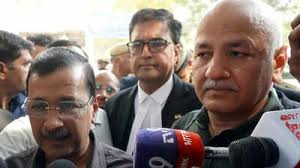

A Special CBI Court has acquitted Delhi Chief Minister Arvind Kejriwal, former Deputy Chief Minister Manish Sisodia and 21 others in the Delhi Liquor Policy case. While clearing all the accused, the court also ordered departmental action against the investigating officer, saying he showed a “complete disregard” for facts while prosecuting the case.
The court made strong observations about the way the investigation was conducted and said there was no material evidence to support the charges.
Court Pulls Up Investigating Officer
The Special CBI Court said government officials performing their routine duties in implementing a public policy were wrongly prosecuted. According to the court, the case was based mainly on inadmissible hearsay attributed to an approver, and not on solid evidence.
According to India Today, calling the approach “particularly disturbing,” the court said public servants were charged despite the absence of substantive proof. It observed that the investigating officer adopted a “conscious and calculated stratagem” by keeping the allegations deliberately “fluid.”
The court noted that the officer relied on one individual’s statement to support the case, while also keeping open the option of implicating that same individual if the prosecution failed. This dual strategy, the court said, showed that the officer was aware of the weakness of the allegations.
It recommended initiation of departmental proceedings against the officer for framing then-Deputy Excise Commissioner Kuldeep Singh as an accused without any supporting material.
The court also stated that there was no evidence of manipulation or influence in the creation of the Delhi excise policy. It said the policy change followed detailed discussions, written notings, Cabinet decisions and formal ministerial directions.
The court added that the decisions were taken collectively and not unilaterally by any one individual.
What About The Evidence?
The court found no evidence against Arvind Kejriwal or Manish Sisodia. It said Kejriwal was implicated only in his role as Chief Minister and party leader, with no material showing his involvement in policy meetings. Similarly, there was no proof that Sisodia took any unilateral decision.
Clarifying its role, the court said it is not for the judiciary to judge whether a policy change is correct, but only to see if there was criminal wrongdoing. Since the prosecution failed to provide material evidence, the accused were discharged.