
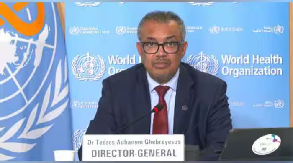

World Health Organisation (WHO) director general Tedros Adhanom Ghebreyesus on Saturday warned that Nipah virus cases are rare but serious at the same time. The global health body chief Dr Tedros said that cases related to the Nipah virus outbreak are restricted to India and not other country has reported yet.
In a post on X, Dr Tedros wrote, “The two case of Nipah virus infection reported by India in West Bengal are the third in this state since the virus was first identified in 1998.”
He also informed about the Indian authorities are following more than 190 contacts, and none have developed the disease yet.
He further wrote, “Authorities have increased disease surveillance and testing, implemented prevention and control measures in health care settings, and are keeping the public informed about how to protect themselves.”
The WHO chief issued the warning a day after the global health organisation stated that the virus posed a ‘low risk’ of spreading and that there was no need for travel or trade restrictions.
The body also noted that there was no evidence of heightened human-to-human transmission, keeping the overall risk low.
2 cases reported in West Bengal
West Bengal’s North 24 Parganas district reported two confirmed cases of Nipah virus and both of them were nurses. Later, health officer claimed improvement in their health condition and the two tested negative for the contagion.
Although the male nurse has been discharged, the female nurses is still kept under observation after been taken off ventilator support.
In its release WHO said, “Both cases developed symptoms typical of severe NiV infection in late December 2025 and were admitted to hospital in early January 2026. As of 21 January 2026, the second case showed clinical improvement, while the first case remained under critical care.”
Nipah virus (NiV) cases in India have generally stayed low annually since 2001, apart from spikes of 66 cases in 2001 and 18 in 2018. Over the past five years, roughly a dozen confirmed infections have been recorded, exclusively in Kerala. The country employs strong preventive measures, such as ongoing NiV monitoring, centrally and state-level Rapid Response Teams, and rapid laboratory testing capabilities to manage potential outbreaks.
Fatality ranges from 40%-75%
According to WHO, Nipah virus is a zoonotic virus, usually transmitted from animals to humans, but can also be transmitted through contaminated food or directly between people.
Individuals infected with Nipah virus may experience fever along with neurological symptoms (such as headache or confusion) and/or respiratory symptoms (such as cough or difficulty breathing).
Nipah virus infections were first identified in 1998, and since then cases have been documented in Bangladesh, India, Malaysia, the Philippines, and Singapore. The estimated case fatality rate ranges from 40% to 75%.