
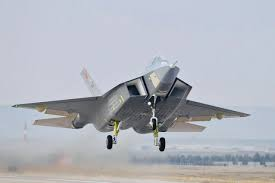

Turkey’s Turkish Aerospace seeks to ensure that the KAAN fighter jet is capable of fighting against some of the world’s best stealth aircraft, like the F-35 and the F-22. To ensure that this twin-jet engine aircraft performs optimally, Turkey needs some powerful American engines. Since September 2025, Turkey has been able to get up to 10 engines, which will be used in prototype aircraft that will undergo rigorous testing from 2026.
But an issue seems to have erupted, as Turkey has started negotiations with America for 80 more engines. American counterparts have stalled on this deal. But what is the reason behind the sudden impact on the deal, you might ask?
Here’s What Went Wrong
According to a global report, the primary reason for this is the S-400 missile system Turkey purchased from Russia in 2019. This is also the reason Turkey was previously excluded from the F-35 program. Now, Turkey is trying to placate the US while simultaneously developing its own indigenous TF35000 engine, but until the engine is ready for use, Turkey will have to rely on US-made engines.
10 Have Arrived, 80 Still Needed
As per a social media post by Turkey’s security agencies, they have received their first consignment of F110-GE-128E engines. According to new reports, these first 10 engines will first be fitted to test aircraft that will take their first flight in 2026.
Beyond this, Turkey also seeks to acquire 80 more engines so that it can power the Block 10 and Block 20 series fighter jets as well. But the lack of an American license has been stopping the nation from getting these new engines. American suppliers have halted all supplies and will continue to operate on this decision until the Russian S-400 purchase issue is resolved.
Turkey’s TF35000
Turkey has started developing its own engines. Turkish company TUSAŞ Engine is currently working on the all-new TF35000 engine. Experts say that the engine will be ready by 2032, meaning that the need for US engines will still persist for the next 7–8 years.
Turkey’s KAAN fighter jet project faces a crossroads: success in domestic production, but reliance on US engines could shape its global alliances and the first major flight in 2026.