
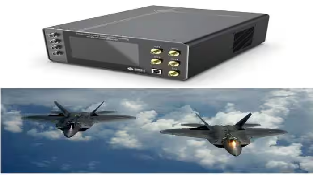

China has announced it has begun mass-producing the world’s first ultra-sensitive quantum radar detector, called Photon Catcher. The device can detect individual photons, the smallest units of light, making it capable of spotting stealth aircraft that are normally invisible to conventional radar.
Developed at the Quantum Information Engineering Technology Research Center in Anhui Province, Photon Catcher is set to become a key technology in modern quantum radar and communication systems, giving China a potential edge in monitoring advanced fighter jets like the American F-22 and India’s Rafale.
A New Era In Radar Technology
The Science and Technology Daily, published by China’s Ministry of Science and Technology, reported last Friday that Photon Catcher is a breakthrough in quantum radar technology. The publication highlighted that large-scale production demonstrates Beijing’s growing self-reliance and leadership in quantum information technologies.
The single-photon detector, according to the daily, is extremely sensitive and capable of picking up individual photons among billions, an achievement previously considered almost impossible.
Detecting One Photon Among Billions
Humans see countless photons while looking at an image. Detecting a single photon amid such numbers is like hearing the sound of a grain of sand falling during a storm.
The ability to detect these individual photons allows even extremely weak energy signals to be identified, a principle essential for quantum radar and quantum communication systems.
F-22 No Longer Invisible?
American stealth jets like the F-22 rely on special coatings and airframe designs to absorb or deflect radar waves, making them invisible to conventional radar.
Quantum radar operates differently. When stealth aircraft interact with photons emitted by the radar, the photons’ original quantum properties change.
According to the no-cloning theorem of quantum mechanics, fake signals emitted by aircraft cannot perfectly replicate the original photons’ physical properties. By analysing the reflected photons’ positions and states, quantum radar can effectively detect deception.
The technology improves detection of low-visibility targets, consumes relatively little power and can be deployed across multiple platforms. Its low-energy emissions make the radar itself hard to detect, while ensuring reliability and security in complex electromagnetic environments.
Rafale Jets Are No Exception
The Indian Air Force currently operates the advanced Rafale fighter jets, which are part of the 4++ generation of combat aircraft and equipped with cutting-edge weapons and technology.
In any future conflict scenario with China, the quantum radar could quickly detect these jets and relay precise information to Chinese air defense systems, potentially creating a significant challenge for Indian operations.