
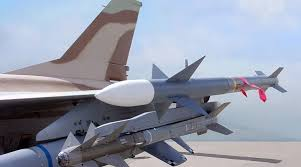

Israel’s Sky Sting To Rule Indian Skies: In a move that could significantly enhance India’s indigenous fighter capabilities, Israel’s RAFAEL Advanced Defense Systems has offered its next-generation Sky Sting Beyond Visual Range Air-to-Air Missile (BVRAAM) for integration with the HAL Tejas Mk1A fighter jet. The Sky Sting, unveiled as part of deepening India–Israel defence cooperation, is designed for long-range air combat, with a reported engagement range of up to 250 kilometres. If inducted, the missile could provide the Tejas Mk1A with an edge against advanced adversary weapons such as China’s PL-15 missile.
Faster Integration Timeline
According to Israeli defence sources, integration of the Sky Sting with Tejas Mk1A is expected to progress rapidly thanks to the aircraft’s ELM-2052 AESA radar and Digital Flight Control Computer (DFCC). The process is projected to take around 18 months, requiring only a few live-firing trials before full operational clearance.
RAFAEL reportedly presented the proposal during high-level meetings in Tel Aviv in July 2025, offering similar integration options for India’s Su-30MKI fighters as well. Initial batches could include 200–300 missiles by mid-2026.
Advanced Missile Features
Weighing approximately 180–200 kilograms, the Sky Sting uses a three-stage rocket motor for sustained high-speed flight and long-range engagement. It employs GPS and inertial navigation for mid-course guidance, switching to an active RF seeker during terminal attack phases.
The missile also features a two-way data link, allowing pilots to update targets mid-flight, and a high-explosive warhead capable of destroying enemy aircraft even under heavy electronic countermeasures.
Operational Timeline
Captive flight trials are expected to conclude within six months, followed by live testing, paving the way for the missile’s entry into service by mid-2027. Once integrated, the Sky Sting will significantly strengthen the air dominance capabilities of both the Tejas Mk1A and Su-30MKI fleets.
The introduction of this Israeli BVRAAM could help bridge capability gaps amid delays in India’s indigenous Astra MkIII missile programme, while marking a fresh chapter in the growing India–Israel strategic defence partnership.