
Harsh V Pant
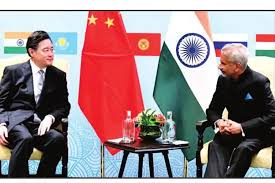
A cautious rapprochement between India and China has been underway since the Kazan Summit in October 2024, and this year has already seen a surge of bilateral exchanges across government, think tanks, media and academia. The reset has delivered progress on visa relaxations, pilgrimage resumptions, people-to-people ties and soon, direct flights. Talks on trade and economic cooperation continue. Yet, caution remains the defining feature, reinforced by Beijing’s support for Pakistan during Operation Sindoor and its curbs on rare earth magnets, tunnel-boring equipment, advanced goods and specialist personnel. Recent tariff impositions, however, have given new urgency to the reset, underscored by the visit of Chinese foreign minister Wang Yi to Delhi. The breadth and depth of the agreements emerging from these talks suggest that the rapprochement is gaining pace, even amid persistent suspicion.
The Ever-Present Schism
The 2020 Galwan clash and subsequent standoff dealt a major setback to India-China relations, deepening mistrust and discrediting earlier agreements. For nearly five years, the freeze held, despite consistent military and diplomatic talks that produced buffer zones and revised patrolling protocols as a temporary modus vivendi. The thaw initiated at Kazan, however, has yet to percolate down to the Line of Actual Control. Troop disengagement has taken place, but not de-escalation, demobilisation or meaningful progress on border delimitation, although recent accords hint at new ideas. Both sides still deploy about 60,000 troops each along the frontier, leaving the peace fragile at best.
Moreover, structural tensions continue to shape the relationship. China champions multipolarity at the global level but resists a multipolar Asia, which India prefers. Beijing’s naval presence in the Indian Ocean has expanded substantially over the years, while its hard competitive line in South Asia shows little sign of easing. Frictions also persist over the trade restrictions, the South China Sea, Taiwan, Tibet and Pakistan. Beijing continues to arm India’s rivals, while New Delhi has begun to market weapons to Southeast Asia. As India’s economic and diplomatic profile grows, competition for resources, markets and influence in the Global South and beyond with China appears set to intensify.
What’s Driving The Rapprochement?
Yet, both India and China are bound by geography, and no bilateral rupture can erase that reality. Together, home to nearly 3 billion people, these neighbouring giants remain strikingly uninformed about one another. Mutual ignorance, at both societal and policy levels, has hindered meaningful engagement for decades. Yet, in an era defined by multipolarity, economic interdependence and strategic recalibration, looking past each other is a luxury neither country can afford.
China offers valuable lessons in urban planning, digital infrastructure, green energy, and frontier technologies such as artificial intelligence. Its venture capital ecosystem is deep, its manufacturing capacity unmatched. India, on the other hand, provides what China increasingly needs: a vast, growing, and relatively stable market. If the two can forge even a modestly functional economic partnership, the ripple effects could benefit the broader Asian region.
India offers China both scale and security for long-term investment. Grand projects such as the BRI, GSI, GDI or the stalled BCIM corridor have delivered little, weighed down by mistrust and geopolitics. By contrast, sectoral engagement, tourism, agricultural machinery, consumer goods and other practical areas offer faster returns with lower risk. With global growth slowing and supply chains shifting, India’s scale and China’s capital and expertise create natural complementarities. Proximity lowers costs, while consumer demand on both sides offers depth. Incremental, commercially grounded initiatives may lack fanfare, but they can generate jobs, boost trade flows and, over time, lay the foundation for broader strategic stability.
No Permanent Friends
Multipolarity is no longer a distant forecast; it is taking shape now. India already ranks as the world’s most populous nation, its fourth-strongest military power, and is on course to become the third-largest economy. In a multipolar world, permanent allies and lasting rivals are illusions. What matters and endures is national interest. For India, this means a pragmatic stance: every state is a partner until proven otherwise, while the neighbourhood commands priority and creative diplomacy. Multipolarity will normalise fluid alignments and overlapping coalitions, pushing states to hedge, seek leverage, and widen their options. It is in this context that India and China have quickened their rapprochement, driven less by trust, which remains scarce, than by necessity. The much-talked-about “Trump factor” remains marginal in this rebuilding of ties but will certainly inform choices going forward. New Delhi will continue to seek convergence with Beijing, wherever possible, even while building its own deterrent capabilities.