
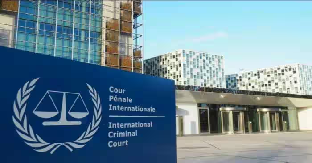

The United States has expanded its sanctions against the International Criminal Court, targeting four senior judges and prosecutors in connection with ongoing investigations into alleged Israeli war crimes in Gaza. US Secretary of State Marco Rubio announced the latest sanctions on Wednesday.
“The Court is a national security threat that has been an instrument for lawfare against the United States and our close ally Israel,” Rubio said.
The new measures affect Canadian Judge Kimberly Prost, French Judge Nicolas Guillou and deputy prosecutors Nazhat Shameem Khan of Fiji and Mame Mandiaye Niang of Senegal.
Guillou oversaw the pre-trial panel that issued the arrest warrant for Israeli Prime Minister Benjamin Netanyahu, while Khan and Niang helped uphold the warrants. Prost is sanctioned for authorising the ICC investigation into U.S. personnel in Afghanistan.
The United States cited their roles in actions it described as “illegitimate and baseless” against Israel and American officials.
The ICC has faced fierce criticism from Washington, particularly after issuing arrest warrants for Netanyahu and former Defence Minister Yoav Gallant over alleged war crimes and crimes against humanity in Gaza. The court is also investigating potential abuses by U.S. forces in Afghanistan, though it prioritises Taliban and ISIS-related atrocities.
Following the U.S. announcement, the ICC condemned the sanctions. The court called the measures “a flagrant attack against the independence of an impartial judicial institution” and reiterated its commitment to pursue accountability for victims of war crimes worldwide.
Netanyahu praised the U.S. move as “a decisive act against a smear campaign of lies against the State of Israel”.
Two of the sanctioned officials, Prost and Guillou, come from Canada and France, countries that recently recognised a Palestinian state in response to Israeli actions in Gaza and the West Bank. The French Foreign Ministry said the judges’ work is “essential in the fight against impunity”, highlighting the international stakes involved.
UN spokesperson Stephane Dujarric warned that the sanctions “impose severe impediments on the functioning of the office of the prosecutor”, undermining the foundations of international justice.
The United States has long opposed the ICC and has resisted the idea that American officials could face prosecution for war crimes. Previous administrations had avoided extreme measures like sanctions. This new round represents the Trump administration’s most assertive step. Critics say the action could weaken international law to shield Israel and American personnel from accountability.